01What is public speaking, really?
Public speaking is simply the act of delivering an idea, out loud, to a group of people who are looking at you. That's it – and yet for most of us it triggers a wave of dread that a one-to-one conversation never does. The reason isn't the words; it's the spotlight. The moment attention turns on you, your body treats a friendly audience like a threat, and the pounding heart, dry mouth and blank mind follow. Understanding that this is a wiring quirk, not a verdict on your ability, is the first step to getting past it.
The encouraging part is that public speaking is a learnable set of habits, not a fixed personality trait. A clear opening, steady eye contact, a controlled pace, a plan for when your mind goes blank – every one of these can be trained the same way you'd train for a sport. Good public speaking training doesn't try to turn you into someone else; it gives you a small number of reliable techniques and enough rehearsal that they still work when the stakes are real. That's what the exercises below are built to do.
02Who needs to learn how to speak in public?
Far more people than would ever call themselves speakers. The team lead presenting quarterly numbers, the founder pitching an investor, the best man on his feet at a wedding, the teacher in front of a class, the student defending a dissertation, the specialist explaining a diagnosis, the candidate in a final interview – all of them are speaking in public, and all of them get judged partly on how they do it. In a world of video calls and recorded talks, the number of moments where your voice carries the message has only gone up.
You don't need to dream of a keynote stage to benefit. If your throat tightens before a status update, if you rush through every point to get it over with, if a single hard question can derail you, this is for you. Public speaking skills compound: the same calm that steadies a two-minute toast is the calm that carries a conference talk. Build the habits small, on low-stakes occasions, and they'll be there when a big one finally matters.
03Public speaking anxiety – and the blackout everyone fears
Public speaking anxiety is an obstacle for many speakers, and it feeds on two mistakes. The first is trying to make the fear disappear before you start. It won't, and chasing that goal only adds a second layer of stress – now you're anxious about being anxious. Experienced speakers don't feel nothing; they've simply learned to work while the adrenaline is still running. The second mistake is under-preparing and hoping charm will cover the gaps. Nerves shrink in direct proportion to how well you know your material and how many times you've said it out loud.
Then there's the specific terror: the blackout, the moment your mind goes completely blank mid-sentence. It feels like the worst thing that could happen, so people over-memorise a script to prevent it – which is exactly what makes a blank so catastrophic, because one missing word derails the whole recital. The fix is counterintuitive: don't memorise words, memorise a structure. If you know your three main points and the order they come in, a lost sentence is a two-second pause, not a collapse. The exercises below train both the anxiety and the blackout head-on.
047 public speaking exercises to build real confidence
Run through these in order the first time – they move from settling your body to a full dress rehearsal. After that, drill whichever one fixes your weakest link before your next talk.
Breathe against the nerves
Your body reads a room full of eyes as danger and floods you with adrenaline – fast breath, tight chest, shaky voice. Interrupt it before you start: breathe in for four counts, hold for seven, out slowly for eight, twice over. Many speakers find that it steadies their voice before they start. Then relabel the feeling – "I'm charged up because this matters" instead of "I'm terrified". Fear and excitement produce almost identical sensations; the name you give them decides which one you experience on stage.
Nail the opening hook
Your opening sets the tone, so never open with logistics or an apology. Write and rehearse a real hook: a short story, a surprising fact, a sharp question, or a vivid image that lands your topic in one stroke. Because you've rehearsed it word for word, you launch on autopilot exactly when your nerves peak – and the audience's early attention feeds back as confidence. A strong start buys you goodwill for everything that follows.
Hold steady eye contact
Nothing signals confidence – or builds it – like looking people in the eye, yet under pressure we stare at slides, notes or the floor. Practise this: pick two or three friendly faces in different parts of the room and speak a whole thought to one of them before moving to the next. Real eye contact turns a faceless crowd into a set of individual conversations, which is far less frightening, and it makes every listener feel spoken to. Rehearse it on a camera lens until holding a gaze feels natural.
Control your pace and pauses
Nerves push the pace up until words blur and the audience can't keep up – the most common tell of an anxious speaker. Deliberately slow down, and add silence: pause for a full second after your key sentences. To you that silence feels endless; to the room it reads as authority and gives the point time to land. Record yourself, notice where you race, and mark breathing points in your notes. Pace and the courage to pause are what separate a nervous rush from a commanding delivery.
Rehearse the blackout
The fear of going blank shrinks the moment you have a plan for it. First, know your structure – three points in a fixed order – so a lost word is never a lost talk. Then rehearse a recovery line you can say on reflex: "Let me put that another way" or a calm pause with a glance at your notes buys you a moment to find your place. Practise deliberately stopping mid-sentence and finding your place again. Once a blank stops being a disaster, most of its power over you is gone.
Practise on a small stage first
Confidence in front of a hundred people is built in front of two. Don't let your next big talk be the first time you've spoken up out loud – manufacture low-stakes reps. Ask a question at a meeting, give the toast at a small dinner, volunteer to summarise for your team, speak up in a workshop. Each small, real audience makes the next one feel less new. By the time a genuinely big occasion arrives, standing and speaking is familiar ground, not a first attempt.
Record yourself and get feedback
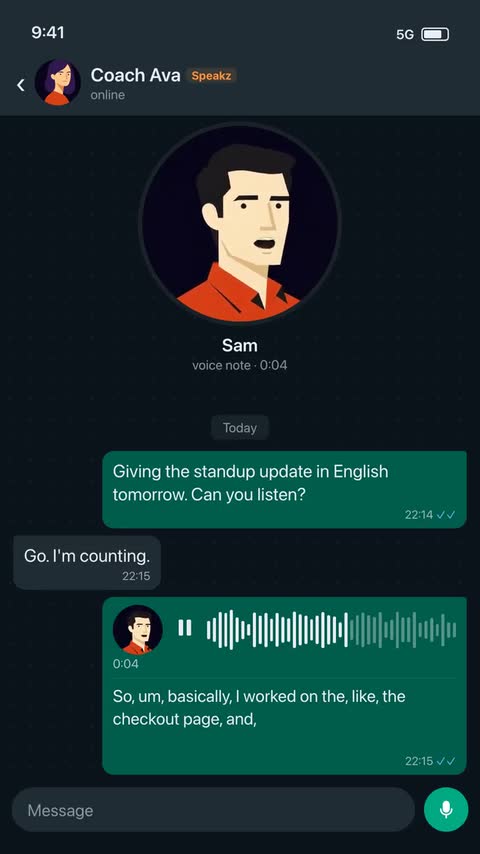
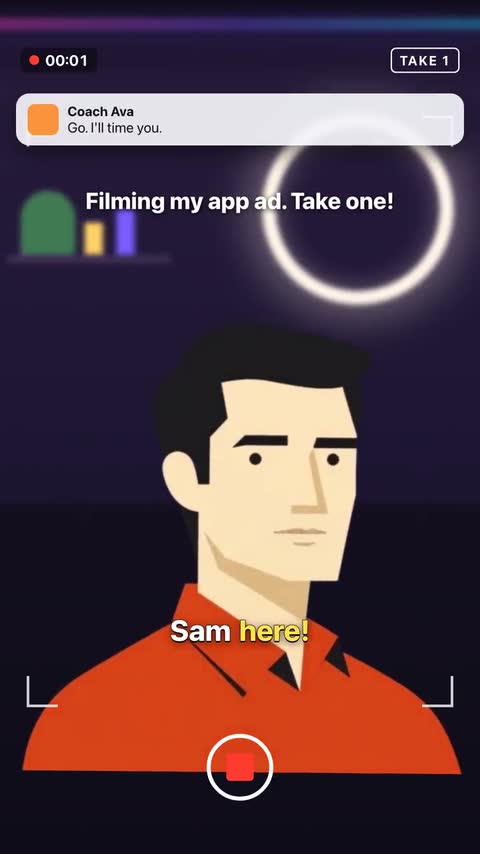
You can't fix what you can't hear. Record a full run-through on your phone – standing, out loud, start to finish – then watch it back once for pace, once for filler words, once for eye contact and posture. It's uncomfortable and it's the fastest teacher you have. Better still, deliver it to one trusted person and ask for a single specific thing to change. Honest outside feedback catches the habits you're blind to and turns a vague "I was bad" into a concrete next rep.
05FAQ
How do I get better at public speaking?
Practise out loud, on purpose. Pick one habit – a strong opening, steady eye contact, a slower pace – and drill it aloud rather than in your head. Rehearse the whole talk standing, start to finish, at least twice, and manufacture small low-stakes chances to speak so the spotlight becomes familiar. The single biggest lever is simply speaking in public out loud more often; practising out loud matters more than reading about technique.
How do I overcome public speaking anxiety?
Stop trying to make the fear vanish and learn to work while it's there. Calm your body first with slow breathing – in for four, hold for seven, out for eight – just before you start, then relabel the adrenaline as excitement rather than dread. The deeper fix is preparation: nerves shrink in direct proportion to how well you know your material and how many times you've rehearsed it aloud. Small, frequent speaking practice steadily rewires the panic response.
What should I do if my mind goes blank while speaking?
Pause, breathe, and glance at your notes – a two-second silence feels enormous to you and barely registers with the audience. The real protection is preparation: memorise your structure, not a word-for-word script, so a lost sentence never derails the whole talk. Keep a recovery line ready, like "let me put that another way", to buy your brain a moment. Once you've rehearsed recovering from a blank, it stops being the disaster you fear.
Can I learn public speaking, or is it a natural talent?
It's learned. A clear opening, eye contact, pacing, handling nerves and blanks – every one is a technique you can practise, not a fixed trait. Even seasoned speakers feel adrenaline before they go on; the difference is they've built the habits and trust their preparation. Many people who look naturally gifted have simply practised more, which is exactly what public speaking training gives you.
How long does it take to become a confident public speaker?
There is no fixed timeline. Progress comes from practising out loud, so every talk you rehearse counts. Lasting confidence builds over a handful of real speaking occasions as the habits turn automatic. There's no long wait and no shortcut around speaking up – the sooner you start collecting small reps, the sooner the big ones feel easy.
Practice out loud.
Meetings, pitches, everyday talk. Speakz is free on iPhone, iPad and Android.
Get speakz. free